
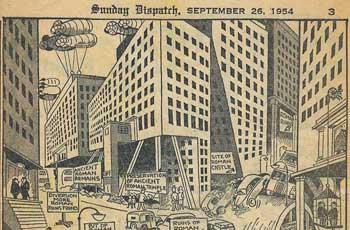
‘Rebuilding London – if they have to preserve these Roman discoveries’
(Moon, Sunday Dispatch, 26 September 1954)
Ian Blair
Given that more than sixty years have passed since the publication of this cartoon inspired by the discovery of the Temple of Mithras, we can justifiably say that the perfect archaeological storm, of developers having to preserve every Roman building, structure and artefact in situ, never did actually come to pass.
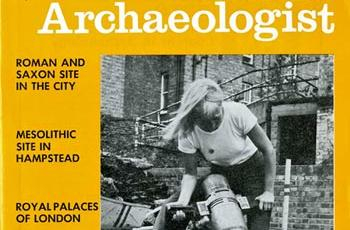
Oh No Mates… Is Absolutely Nothing Sacred?
the Crumbling Bastions Of Chauvinism: Well Perhaps Not!
Ian Blair
Over the weekend, I came across a news item published in September 1978 in the Brighton Evening Argus. It features Gill Craddock (Scarlett), a long term friend who I worked with on numerous archaeological sites in Sussex, before independently hearing Bow Bells calling, we both headed to London and the DUA.
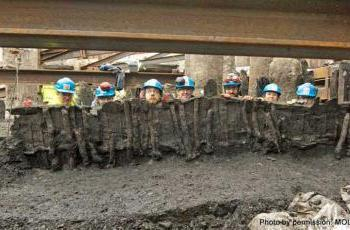
'Shortage of archaeologists'
Ian Blair
In advance of a future post on the ‘London Mithraeum’, a nice photo for Friday showing some of the diminutive archaeologists who worked on the main phase of the Bloomberg London site (BZY10) in 2013.
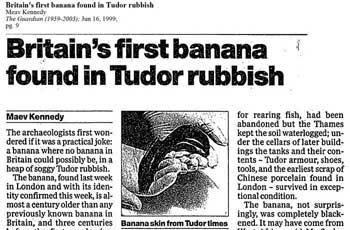
Britain's first banana found in Tudor Rubbish
The Guardian June 16, 1999
With comments from our Facebook page
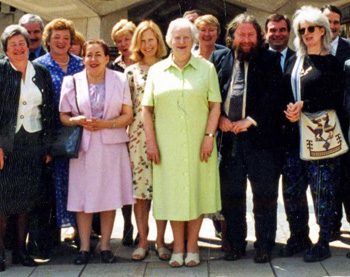
'Milestone or Millstone?'
Ian Blair
Photo taken in 2001 in the Guildhall Yard following a special lunch to mark the occasion of those featured reaching the milestone (or should that be millstone?) of having worked for the Corporation of London for twenty five years.
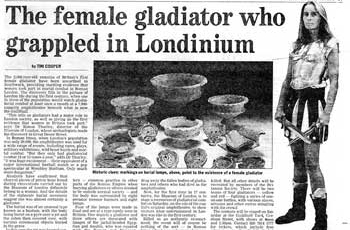
‘Gladiatrix’: or hands up, who threw that banana skin into the arena? – someone could have slipped on that and been hurt.
Ian Blair
Whilst having a tidy up over the weekend, I came across this press cutting from the Evening Standard dated 12 September 2000: ‘The female gladiator who grappled in Londinium’.
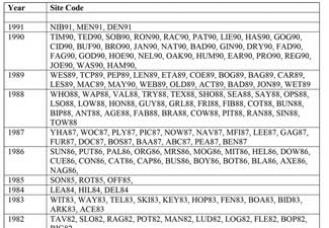
From FAB88 to JOE90: Inspiring site codes from the past
Ian Blair
The DUA & DGLA years represented a golden age for the assignment of memorable and frequently humorous site codes. Whereas, now they are simply a random (and generally instantly forgettable) alphanumeric combination assigned by the LAARC, formerly those for the City and the DUA were directly attributable to Penny MacConnoran, and consequently there was more than a hint of humour contained therein.
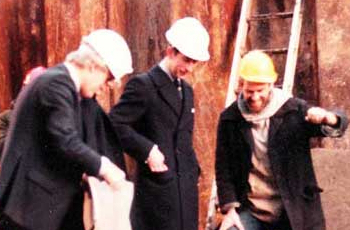
'Billingsgate memories: or Mad as a hatter’
Ian Blair
Prelude:
Two cows in a field, one says to the other ‘Have you heard about this mad cow disease?’ the other replies: ‘It won’t affect me I’m a horse’
By far the largest of the DUA’s excavations in the 1980’s, was the Billingsgate site (BIG82) undertaken in the former lorry park on the west side of the fish market.
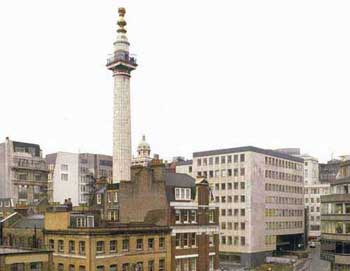
Lock, Shop, and Twenty Smoking Barrels
Ian Blair
It was good to see that the series: ‘The Great Fire: In Real Time’ which aired over three consecutive nights (31st May - 2nd June 2017) on Channel 5, borrowed on the archaeological evidence of the Great Fire, which has been recorded by countless archaeologists, on an ever growing number of sites over the past seventy years.
What price an archaeologist?
Ian Blair
Photographs from Jon Bailey and Friederike Hammer
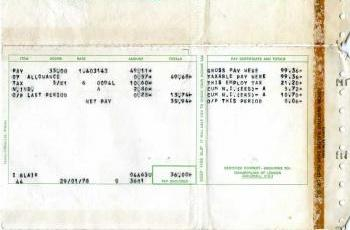
The recent posts and comments related to early pay rates in the DUA, brought to mind the discovery of an ancient dust-covered file, containing contracts and pay slips dating back to my arrival in the DUA at the start of 1978. At that time, I joined a merry band of archaeologists on the GPO site in Newgate Street (GPO75), which at times could reasonably be described as betwixt an archaeological excavation and the Glastonbury Festival.
'Archaeology through a lens': Unsung heroes of London archaeology No.533
Ian Blair
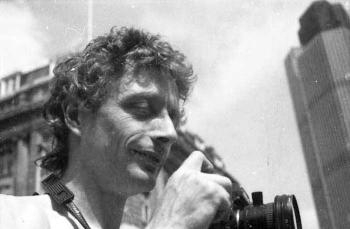
It struck me recently, that whilst there have been hundreds of archaeologists working in London since the formation of the DUA in 1975 to the present day, just how few photographers there have been in the intervening period, a paltry six in over forty years of continuous archaeological excavation!
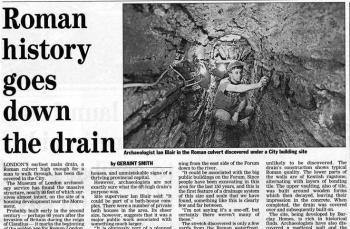
Roman history goes down the drain: or the man with the $100,000 breasts
Ian Blair
Monument House (BPL95) was a small site on Botolph Lane, with the main excavation undertaken between March and July 1998.
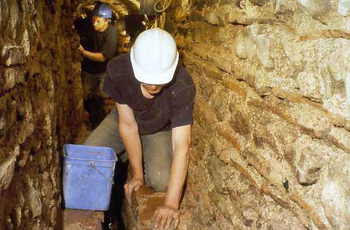
The modest size of the site belied the quality of the archaeology it contained, as not only did it produce the well-preserved remains of buildings destroyed in the Great Fire of 1666, but also a fantastic intact Roman drainage culvert, incorporating a deep access or drop shaft at its upper end.
Monument House
30-35 Botolph Lane, 29-31 Monument Street, EC3.
The enigma of a 20th century time capsule in a 3rd century Roman culvert
Ian Blair 18th May 2017
Almost twenty years on from its discovery on the Monument House site (BPL95) in 1998, the Roman culvert with its access or drop shaft, remains the best preserved example to have been found in the City of London.
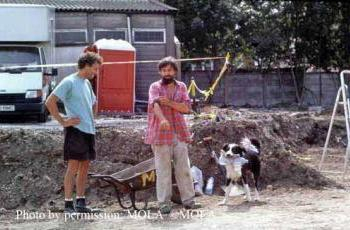
The Three Wise Men of Gotham
Low Hall Depot (Low Hall Manor), South Access Road, Walthamstow, E17
Ian Blair
Three wise men of Gotham,
They went to sea in a bowl,
And if the bowl had been stronger
My song would have been longer.
(Old Nursery Rhyme)
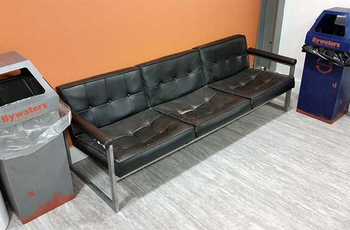
The Hobley Memorial Sofa
Ian Blair
In recent months, the MOLA kitchen has undergone a major transformation, with the old units stripped out and replaced, and new lino laid throughout. Also gone are the knackered table and chairs, now replaced by a breakfast bar and shiny chrome and bright orange bar stools.

Audrey Baines 'Trowel Blazer' in the City of London
Ian Blair
Audrey Baines (later to become Audrey Noël Hume), earned a history BA at Bristol University, before spending the summer of 1947 excavating a Roman villa at nearby King’s Weston.

Ivor Noël Hume
(30th September 1927– February 4th 2017)
Ian Blair
The end of an era: and an incredible loss to archaeology and the literary world
(But what a wonderful legacy you left in your wake!)

What goes around comes around!
Ian Blair
The face, and most of the faces, of urban archaeology in the City of London has changed over the past 40 years, as the care-free days of recognisable diggers clad in skimpy digging gear (in the summer, and often beyond!), has given way to an army of hard-to-recognise archaeologists identically clad and masked by PPE (personal protective equipment).

From the Elephant Man to Bedlam
Ian Blair
Five years before the excavation by Dick Malt and his team at Broad Street Station, Liverpool Street (LSS85) in 1985, the Elephant Man (or at least John Hurt in his guise) had been pursued by a mob through the old Liverpool Street station.

Denis Ballard: ’A Life Well Lived’ (1920–2016)
Ian Blair
Back in 1987, whilst working on the Guildhall art gallery site (GAG87) I happily shared a small trench with Denis Ballard, who at the age of sixty seven had just completed an archaeology degree.
Denis was an accountant by profession, and indeed was only to fully retire from complex mental arithmetic at the age of ninety.